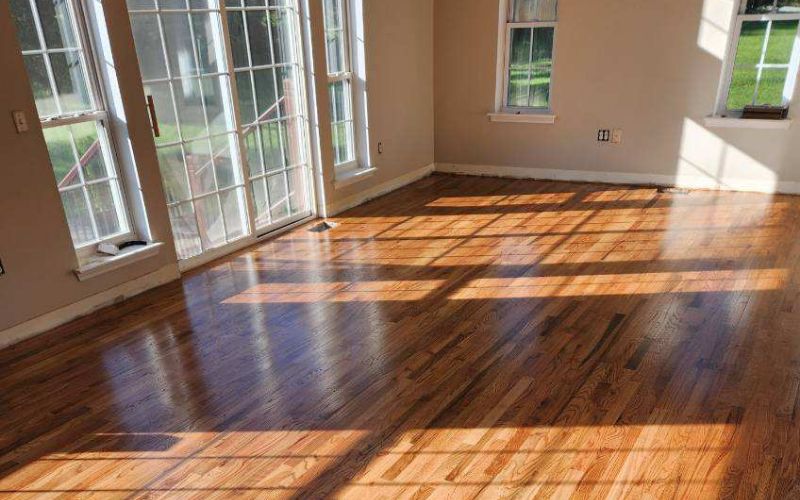
Hardwood floors are one of the most valued features in a Hudson Valley home. When they start looking worn, scratched, or dull, homeowners face a big decision — refinish or replace? The good news is that in most cases, well-maintained hardwood can be restored to a beautiful finish for significantly less than full replacement. Here's how to know which option is right for your floors.
Signs Your Hardwood Floors Can Be Refinished
The majority of hardwood floors that look tired or worn are actually excellent candidates for refinishing. Here are the signs you're in that category:
- Surface scratches and scuffs that haven't penetrated deeply into the wood grain
- Dull or worn finish, especially in high-traffic areas like hallways and living rooms
- Minor discoloration or staining that sits on or near the surface
- Boards that are structurally sound — not soft, cupped, or warped
- A floor that still has adequate thickness in the wear layer for sanding
Most solid hardwood floors can be sanded and refinished multiple times over their life — typically 3–5 times for solid hardwood, depending on the thickness of the planks. If the wood itself is structurally intact and you still have wood above the tongue of the boards, hardwood restoration is almost always the more cost-effective path forward.
Signs You May Need Replacement
There are situations where refinishing can't deliver the results a homeowner is looking for. These are the red flags that suggest replacement may be necessary:
- Boards that are soft, spongy, or show signs of rot — typically the result of prolonged water damage
- Significant cupping or warping that hasn't flattened out after moisture has fully resolved
- Gaps between boards wide enough that sanding alone won't close them
- Engineered hardwood that has already been sanded to the limit of its wear layer
- Widespread structural damage affecting subfloor integrity beneath the hardwood
If only a handful of boards are severely damaged, partial board replacement followed by refinishing the entire floor is often the most cost-effective middle ground. The result is a consistent, restored floor without the expense of a complete tear-out and reinstall.
The Refinishing Process — What to Expect
Traditional hardwood refinishing involves sanding the floors down to bare wood. This process removes the old finish along with surface-level scratches, stains, and oxidation. Once bare wood is exposed, the floor can be re-stained to change or refresh the color, then sealed with multiple coats of a new protective finish.
The trade-off with traditional sanding is disruption. The process creates significant fine dust — even with dust containment systems — and takes several days from sanding through final finish coats. Most families need to vacate the space, and sometimes the entire home, while the finish cures fully. Furniture must be removed from the room before work begins.
Royalty Carpet & Flooring offers a sandless hardwood restoration process that works quite differently. Rather than sanding down to bare wood, we chemically abrade the existing finish and apply a fresh, bonded top coat over it. This approach works well for floors that still have an intact wood surface but a worn, dull, or scuffed finish layer. The results are striking — and the process can be completed in a single day with no dust, no harsh fumes, and no need to move furniture out of the room.
Which Process Is Right for Your Floors?
The right answer depends on what's actually wrong with your floors. If the finish is worn, dull, or showing light surface traffic marks but the wood underneath is in good condition, sandless restoration is the faster, cleaner, more convenient option. You can walk on the floor the same day and the home stays fully livable throughout.
If there are deep scratches that have cut into the wood grain, discoloration that goes below the finish into the wood itself, or you want to change the stain color of the floor, traditional sanding produces more thorough correction. It's more disruptive, but it's the right tool when the damage warrants it. An honest professional assessment — looking at your actual floors in person — is the only reliable way to determine which process fits your situation.
Cost and Timeline Comparison
| Option | Timeline | Disruption | Best For |
|---|---|---|---|
| Sandless Restoration | 1 day | Minimal — stay home throughout | Dull/worn finish, light scratches, no color change |
| Traditional Refinishing | 3–5 days | Must vacate; significant dust cleanup | Deep scratches, color change, heavy damage |
| Full Replacement | 5–10 days+ | Full room vacated; subfloor prep required | Structural damage, rot, irreparable warping |
From a cost perspective, sandless restoration is the most affordable option, traditional refinishing typically costs more due to labor and time involved, and full replacement is significantly more expensive when you factor in removal, subfloor preparation, new materials, and installation. In most cases, if your floors can be refinished, refinishing them is clearly the better financial decision.
Why You Should Have a Pro Inspect Before You Decide
What looks like serious damage from across the room often turns out to be limited to the finish layer — not the wood. And what looks like minor surface wear can sometimes reveal deeper issues once a professional looks closely. Assessing hardwood floors properly requires seeing them in person: checking the board thickness, testing for softness, evaluating the extent of any staining or warping, and understanding what's happening at the subfloor level.
Royalty Carpet & Flooring provides free estimates and will give you an honest, straightforward assessment of your floors — including telling you clearly if we believe replacement makes more sense than refinishing for your situation. We'd rather give you accurate advice than sell you a service that won't deliver the results you're expecting.
Ask Royalty to look at your hardwood floors before you replace them. We serve all of the Hudson Valley — call 845-831-4774 or request a free estimate.
Frequently Asked Questions About Hardwood Floor Refinishing
How many times can hardwood floors be refinished?
Solid hardwood floors can typically be refinished 3–5 times over their lifetime, depending on the thickness of the wear layer. Engineered hardwood has a thinner wear layer and may only support 1–2 refinishing cycles.
How long does hardwood floor refinishing take?
Traditional sanding and refinishing typically takes 3–5 days, including drying time between coats. Royalty Carpet's sandless restoration process is completed in a single day, with no need to vacate the home.
Can water-damaged hardwood be saved?
It depends on the extent and duration of the water exposure. Surface water staining can often be sanded out. Prolonged moisture exposure that has caused cupping, warping, or rot may require board replacement or full floor replacement. A professional inspection will tell you which category you're in.
Is sandless refinishing as good as traditional sanding?
For floors with a worn or dull finish and no deep scratches into the wood, sandless restoration produces excellent results. For floors with deeper damage or that need a complete color change, traditional sanding offers more thorough correction.
Do I need to move all my furniture before refinishing?
For traditional sanding, yes — furniture typically needs to be removed from the room. For Royalty Carpet's sandless process, furniture movement is minimal and the home can remain occupied throughout.
Royalty Carpet & Flooring — Proudly serving the Hudson Valley since 1978.